Hair Transplant · Implanter vs. Slit

Why I place grafts
with an implanter

The more grafts we place, and the closer they sit,
the more carefully we need to protect them
and adjust the size and spacing of each site.

I find the advantages of an implanter even clearer in high-density and large-session transplants. It protects each graft inside the needle while letting me adjust its position and direction as I place it.

An implanter is our standard approach at Motential.
I personally perform both graft extraction and placement.

Motential ClinicMedical Director Dr. Injae Lee
01 Protect grafts inside the needle
02 Match the site to the graft
03 Adjust position and spacing as I go

HOW IT WORKS

How the grafts
are placed

The difference lies in how each graft is placed into the scalp.

Slit method

Create the site, then place the graft

The sites are made first.

STEP 01Create
the sites
STEP 02Place grafts
with forceps

Small incisions are made in the scalp first. Grafts are then held and inserted with forceps, which look like tweezers. Creating the sites and placing the grafts are separate steps.

Slit method in two steps: creating linear incisions in the scalp and placing a hair graft with forceps

Implanter

Our standard approach at Motential

The site is created as the graft is placed.

PREPARELoad the graft
into the needle
IN ONE STEPCreate the site
+ place the graft

A needle of the right size is chosen and the graft is loaded inside it. The doctor selects the position, angle and depth, inserts the needle, then withdraws it while leaving the graft in place.

This comparison covers forceps placement into pre-made slits and direct placement with a sharp-needle implanter. An implanter can also be used to place grafts into pre-made slits.

SLIT VS IMPLANTER

Where the
differences matter

Grafts can be compressed or bent during slit placement.

When a graft is held with forceps and pushed into a pre-made incision, it can be compressed or its lower end can fold over. This may damage important parts of the follicle or alter the planned angle and direction.

An implanter protects the graft inside the needle.

The needle surrounds the graft as it enters the scalp. This helps reduce compression and bending during placement and makes it easier to position the graft at the intended depth and direction.

The incision can be larger than the graft needs.

Even grafts from the same person vary in thickness, length and the amount of surrounding tissue. If multiple slits are made in advance without fully accounting for these differences, some sites may not fit the grafts later placed in them.

Allowing enough room for the forceps can also mean making an incision larger than the graft itself needs. An unnecessarily large incision can increase damage to surrounding tissue and bleeding.

An implanter uses a needle matched to the graft to create the site and place it in one step.

I choose an implanter needle to suit the graft and adjust the depth and angle while looking directly at the area being treated. Creating the site and placing the graft together helps me avoid making the opening unnecessarily large.

An incision already made cannot be moved.

Making slits in advance establishes the graft positions and basic spacing. If an area looks too widely spaced or not dense enough once the grafts are placed, those existing incisions cannot be moved to a different location.

If more grafts are needed after all the pre-made sites are filled, additional incisions are required. Their distance from existing incisions, the surrounding tissue and blood supply must all be considered again. This differs from adjusting each next position as the grafts are placed.

With an implanter, I can see the grafts already placed before choosing the next position.

I check the positions and actual spacing of the grafts already placed before choosing the next site. I do the same when following the direction of the hairline or filling thinner areas between existing hairs.

DENSE & LARGE-SESSION IMPLANTATION

For more grafts
and closer spacing,
I choose an implanter.

I find an implanter particularly helpful in high-density and large-session transplants for reducing graft damage and placing grafts with greater control.

The more grafts we transplant, the more important it is to handle each one carefully. Placing them close together calls for protection of the grafts, precise incision sizes and careful spacing.

An implanter lets me manage all three during placement. The needle protects the graft, creates a site to fit it, and lets me assess the actual spacing before placing the next graft.

That is why, even in larger sessions, I keep checking each graft's size, direction and spacing throughout the procedure. I take the scalp's condition and blood supply into account, aiming for the needed density within a range that supports graft survival.
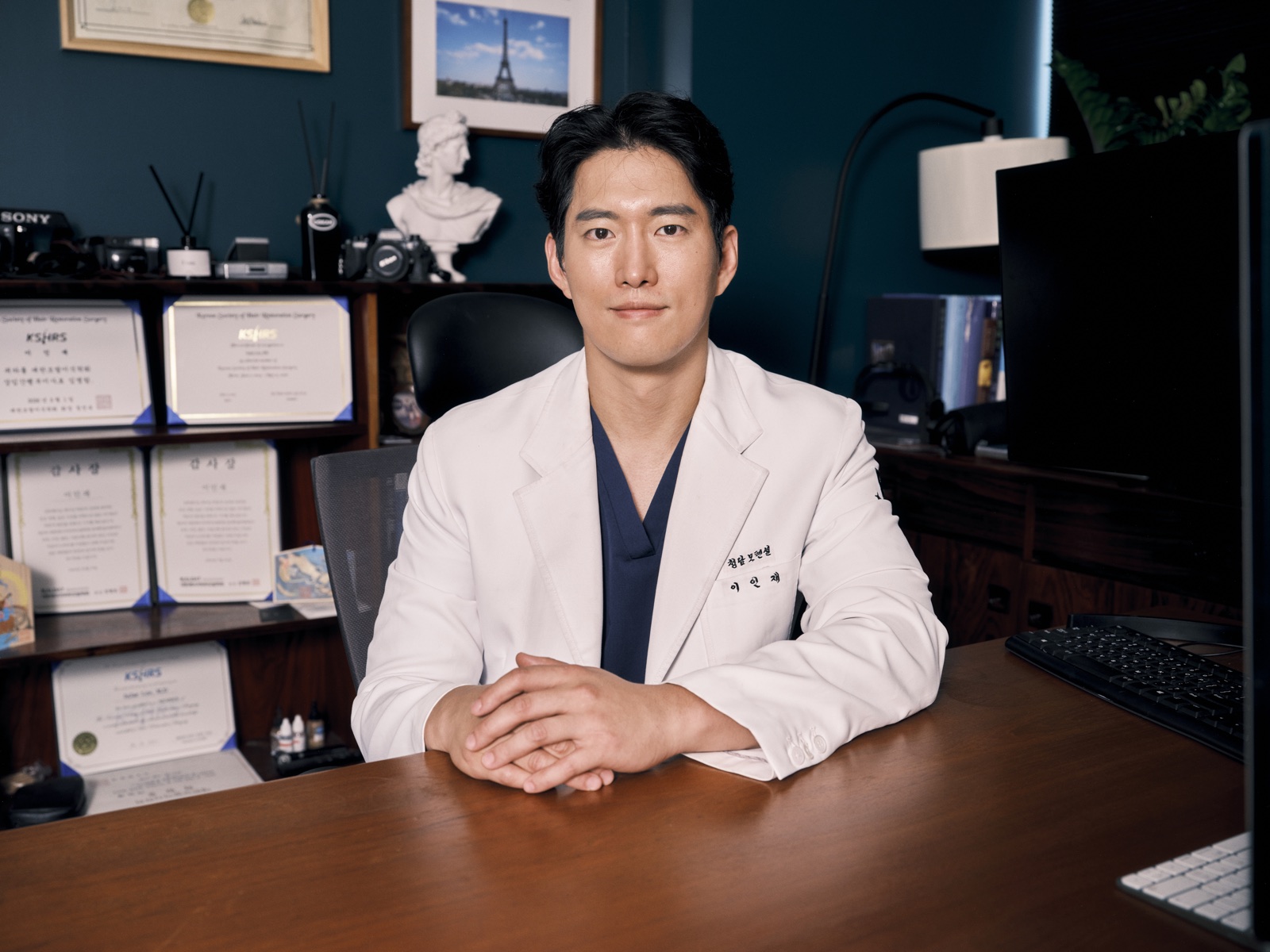
From design to placement,
I do it personally.

Hello.
I'm Dr. Injae Lee of Motential Clinic in Cheongdam.

When I draw the hairline, I am already thinking about which grafts to use, where to place them and which direction they should face. During placement, I adjust the positions and spacing while checking the graft sizes and surrounding hair.

That is why I personally perform the design, extraction and placement. I operate on one patient a day and keep checking the direction and spacing as I place the grafts.

An implanter is my standard approach, but I combine it with slits when needed. If previously placed grafts keep rising out of the scalp, I may make the sites first and then insert the grafts with an implanter. I make that decision based on the patient's scalp and graft condition.

QUESTIONS

Questions I often hear

Does an implanter improve graft survival?

By reducing compression and bending during placement, an implanter helps create favorable conditions for grafts to settle in. But the instrument alone does not determine survival. How grafts are extracted, stored and loaded, the condition of the scalp and the team's experience also matter.

Do these problems happen with every slit procedure?

No. Matching slit sizes to the grafts and placing them carefully can reduce these risks. I use an implanter as my standard approach because it protects the graft while creating the site and placing it in one step. I can also see the grafts already in place before choosing the next position.

Do you personally place the grafts too?

Yes. I personally handle the consultation, design, graft extraction and placement. My team helps prepare and load the grafts into the implanters, and I place them into the scalp myself.

CONSULTATION

What approach
is right for my hair?

I will assess your hair and scalp
and explain where grafts are needed and how many to place.

Motential Clinic, Cheongdam · Medical Director Dr. Injae Lee

YouTubeInstagramKakaoTalk ChatLINE ChatNaver Blog

모텐셜의원 개인정보처리방침

모텐셜의원 개인정보처리방침

모텐셜의원(이하 ‘의원’)은 「개인정보 보호법」 제30조에 따라 정보주체의 개인정보를 보호하고 이와 관련한 고충을 신속하고 원활하게 처리할 수 있도록 다음과 같이 개인정보 처리방침을 수립·공개합니다.

제1조 (개인정보의 처리 목적)

의원은 다음의 목적을 위하여 개인정보를 처리합니다. 처리한 개인정보는 다음 목적 이외의 용도로는 이용되지 않으며, 이용 목적이 변경되는 경우에는 별도의 동의를 받는 등 필요한 조치를 이행합니다.

  • 진료 상담 및 예약: 상담·예약 신청 확인, 예약 일정 안내, 진료 전 사전 문진, 상담 결과 안내를 위한 연락
  • 진료 서비스 제공: 진료·시술의 시행, 경과 관리 및 사후 안내, 진료비 청구·수납
  • 민원 처리: 민원인의 신원 확인, 민원사항 확인, 사실조사를 위한 연락·통지, 처리결과 통보
  • (별도 동의 시) 건강 정보 및 의원 소식 안내

제2조 (수집하는 개인정보의 항목 및 수집 방법)

  • 상담·예약 신청 시: 성명, 연락처(전화번호), 이메일, 성별, 연령, 희망 진료 항목, 상담 내용
  • 민감정보: 상담 내용에 포함되는 두피·모발 상태 등 건강에 관한 정보는 「개인정보 보호법」 제23조에 따른 민감정보로서, 별도 동의를 받아 상담·진료 목적으로만 처리합니다.
  • 자동 수집: 서비스 이용 과정에서 접속 IP, 쿠키, 방문 기록이 생성·수집될 수 있습니다.
  • 수집 방법: 홈페이지 상담·예약 폼, 전화, 카카오톡 채널, LINE, 이메일, 내원 시 서면

제3조 (개인정보의 처리 및 보유 기간)

  • 상담·예약 정보: 수집일로부터 1년 (목적 달성 또는 동의 철회 시 지체 없이 파기)
  • 진료기록: 「의료법」 시행규칙 제15조에 따른 법정 보존기간 (진료기록부 10년, 처방전 2년, 검사소견기록 5년 등)
  • 웹사이트 방문 기록: 「통신비밀보호법」에 따라 3개월

제4조 (개인정보의 제3자 제공)

의원은 정보주체의 개인정보를 제1조의 범위 내에서만 처리하며, 정보주체의 별도 동의 또는 법률의 특별한 규정 등 「개인정보 보호법」 제17조·제18조에 해당하는 경우에만 제3자에게 제공합니다. 현재 제3자 제공 내역은 없습니다.

제5조 (개인정보 처리의 위탁)

의원은 원활한 업무 처리를 위해 다음과 같이 개인정보 처리 업무를 위탁하고 있습니다: 홈페이지 호스팅 및 유지관리 — Automattic Inc.(WordPress.com 운영사). 위탁계약 시 개인정보 보호 관련 법규 준수, 재위탁 제한, 관리·감독에 관한 사항을 계약서에 명시합니다.

제6조 (정보주체의 권리·의무 및 행사 방법)

정보주체는 언제든지 개인정보의 열람, 정정·삭제, 처리정지를 요구할 수 있습니다. 권리 행사는 전화(02-518-1023) 또는 이메일(motential@naver.com)로 하실 수 있으며, 의원은 지체 없이 조치합니다. 만 14세 미만 아동의 개인정보는 법정대리인의 동의를 받아 처리합니다.

제7조 (개인정보의 파기)

개인정보 보유 기간의 경과, 처리 목적 달성 등 개인정보가 불필요하게 되었을 때에는 지체 없이 파기합니다. 전자적 파일은 복구 불가능한 방법으로 영구 삭제하고, 종이 문서는 분쇄 또는 소각합니다.

제8조 (개인정보의 안전성 확보 조치)

의원은 개인정보의 안전성 확보를 위해 접근 권한 관리, 접속기록 보관, 보안 프로그램 설치, 문서 잠금장치 등 기술적·관리적·물리적 조치를 하고 있습니다.

제9조 (쿠키 및 행태정보의 수집)

홈페이지는 서비스 개선과 방문 통계 분석을 위해 쿠키 및 웹 분석 도구(Meta 픽셀 등)를 사용할 수 있습니다. 정보주체는 웹 브라우저 설정을 통해 쿠키 저장을 거부할 수 있습니다.

제10조 (개인정보 보호책임자)

개인정보 보호책임자: 이인재 (대표원장) · 전화 02-518-1023 · 이메일 motential@naver.com. 정보주체는 개인정보 침해에 대한 신고·상담이 필요한 경우 개인정보침해신고센터(privacy.kisa.or.kr, 국번 없이 118)에 문의할 수 있습니다.

제11조 (처리방침의 변경)

이 개인정보 처리방침은 2026년 7월 2일부터 적용됩니다. 변경되는 경우 시행 7일 전부터 홈페이지 공지사항을 통해 고지합니다.