머리 감을 때 빠지는 양, 어느 정도부터 탈모일까?髪を洗うときの抜け毛、どのくらいから病院に来るべき?How Much Hair Falling Out When Washing Counts as Hair Loss?
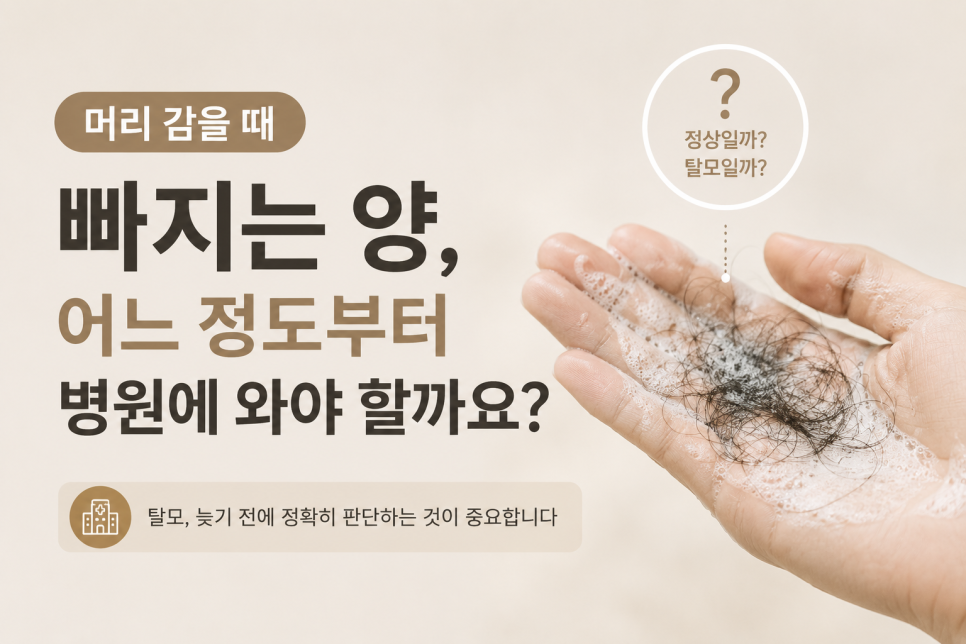
머리 감을 때 빠지는 양, 어느 정도부터 병원에 와야 할까요?
진료중에 뵙는 환자분들중에 이런 말씀 하시는 분들이 많습니다.
최근에 머리 감을때마다 머리가 너무 많이 빠져요
저 탈모인가요?
샤워하고 나오면 욕실 바닥에 한가득, 베개에도 한 움큼, 빗에도 한 움큼. “이거 다 빠지면 끝나는 거 아닌가” 싶은 그 마음, 이해합니다. 당연한 걱정입니다.
오늘은 그 걱정을 좀 정리해 드리고 싶습니다.

하루 50~100가닥은 자연스러운 탈락입니다
사람의 머리카락은 평균 10만에서 12만 개 정도가 두피에 자라고 있습니다. 이 중 대부분은 머리카락이 자라나 있지만, 약 10%가 항상 휴지기(쉬는 시기)에 들어가 머리카락이 자연스럽게 빠집니다. 일부 휴가를 떠나는 것이죠. 그래서 하루 50에서 100가닥 정도 빠지는 건, 탈모와 무관하게 누구에게나 일어나는 일입니다.
이 숫자가 어느 정도부터 의미가 달라지는지 정리해 드리면 이렇습니다.

- 하루 50~100가닥 — 정상 범위
- 하루 100~150가닥 — 가벼운 변화. 일시적이라면 큰 문제는 아니지만, 2~3주 이상 지속되면 원인을 한번 살펴볼 가치가 있습니다
- 하루 150~200가닥이 2주 이상 — 휴지기 탈모(telogen effluvium)를 의심하는 구간
- 하루 200가닥 이상 — 명확한 휴지기 탈모. 출산 직후, 강한 스트레스 사건 직후, 급격한 다이어트나 큰 수술 후 2~3개월 시점에 일시적으로 200~300가닥까지 빠지는 경우가 있습니다. 이 경우에도 원인이 정리되면 보통 3~6개월 안에 회복됩니다.
문제는 이 숫자가 머릿속에 잘 안 들어온다는 점이죠. 한 가닥씩 세어볼 수도 없으니, 항상 “많이 빠지는 것 같은” 느낌만 남습니다.
양보다 중요한 건 ‘모양’입니다
사실 의사 입장에서 양보다 더 신경 쓰는 건 빠진 머리카락의 모양입니다.
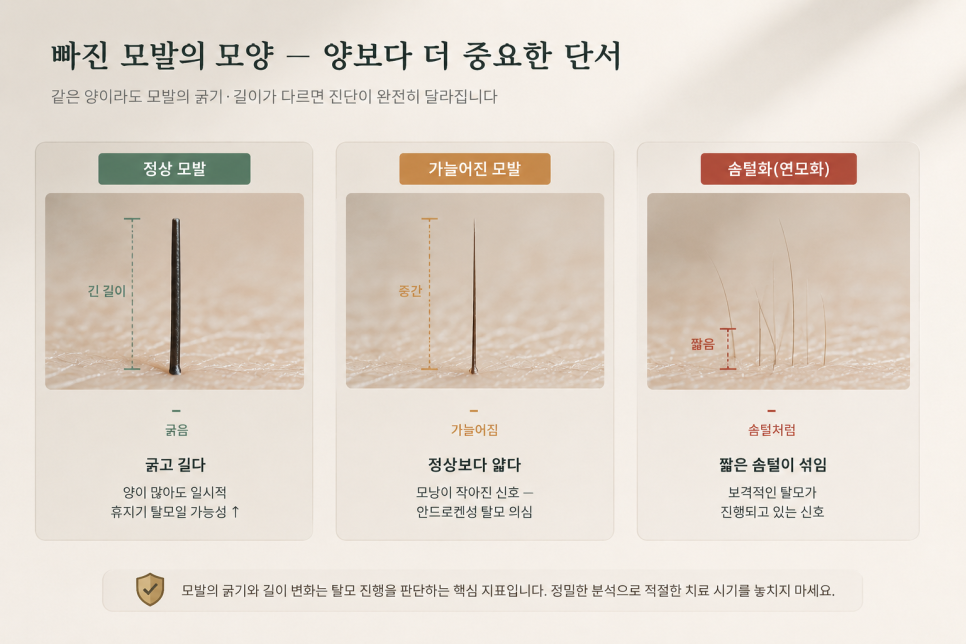
빠진 모발이 점점 가늘어지고 있지는 않은지, 짧은 솜털 같은 것들이 섞여 나오지는 않는지, 가르마가 평소보다 넓어 보이지 않는지, 정수리에서 두피색이 비치기 시작하지는 않았는지. 이런 변화가 한두 달 사이에 누적되면 단순한 휴지기 탈락이 아니라 본격적인 탈모가 시작된 신호일 수 있습니다.
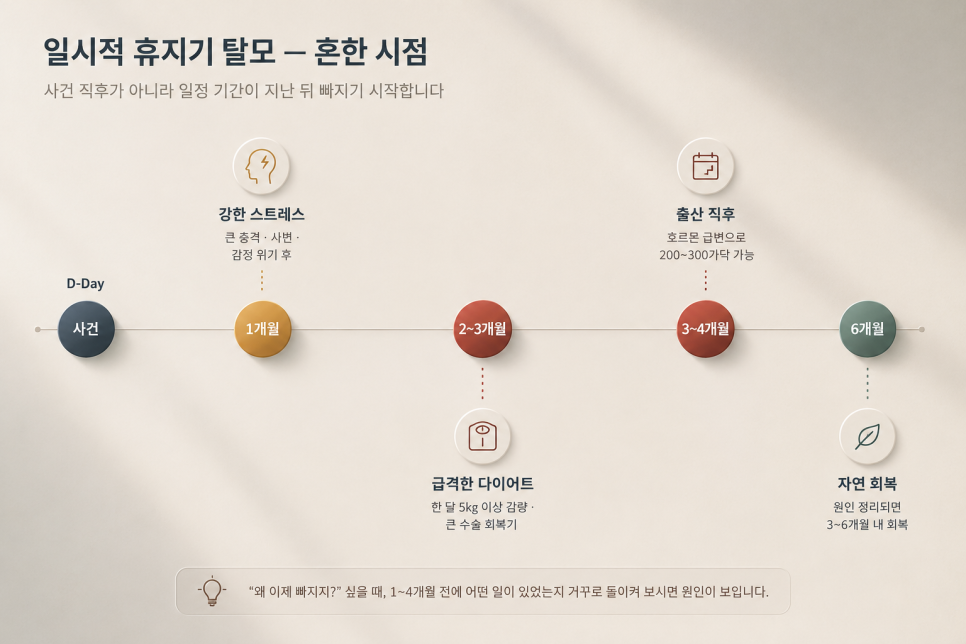
반대로 양은 많이 빠지지만 빠진 머리카락이 여전히 굵고 긴 정상 모발이라면, 일시적인 휴지기 탈모일 가능성이 큽니다. 특히 출산 후 3~4개월, 큰 다이어트 후 2~3개월, 강한 스트레스 사건 후 한 달쯤 되는 시점에 자주 일어납니다. 이 경우는 원인이 정리되면 시간을 두고 자연스럽게 회복되는 경우가 많습니다.
집에서 해볼 수 있는 잡아당기기 검사
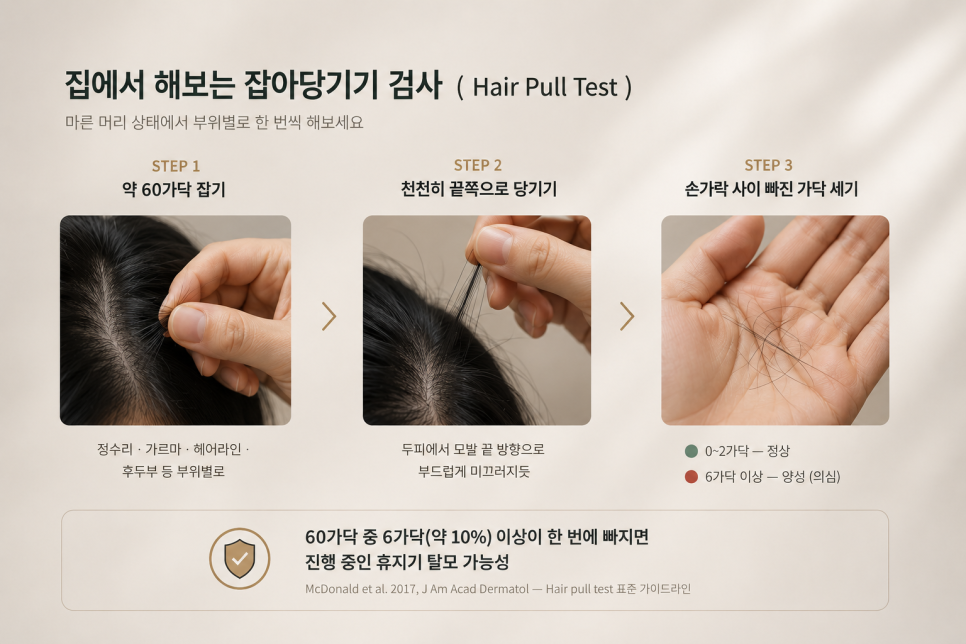
진료실에서도 사용하는 간단한 자가 점검법이 있습니다. 머리 감기 전 마른 상태에서, 한 부위의 머리카락 약 60가닥 정도를 손가락으로 가볍게 잡고 두피에서 모발 끝 방향으로 천천히 당겨 보세요.
정상이라면 0~2가닥 정도가 손가락 사이로 빠져나옵니다. 6가닥 이상(약 10% 이상) 한 번에 빠지면 진행 중인 휴지기 탈모를 의심할 수 있고, 진료를 받아 보시는 편이 좋습니다. 이 검사는 정수리, 가르마, 헤어라인, 후두부 등 영역별로 따로 해보시면 어느 부위가 더 심한지도 가늠할 수 있습니다.
빠진 숫자 체크보다 중요한 탈모 진단법
매일 빠진 양 자체보다, 한 달 전 본인 사진과 거울을 비교해 보시는 게 훨씬 정확합니다.
하루의 빠진 양은 마음의 문제, 한 달 단위의 변화는 의학의 영역이라고 환자분들께 자주 말씀드립니다. 정수리와 헤어라인을 같은 각도, 같은 조명에서 한 달 간격으로 찍어 두시면 진료실에서 가장 정확한 단서가 됩니다.
일조량 등 외부 빛의 영향을 덜 받는 화장실 같은 곳에서 해가 진 뒤 같은 카메라 같은 각도로 찍어 비교해보시면 좋습니다.
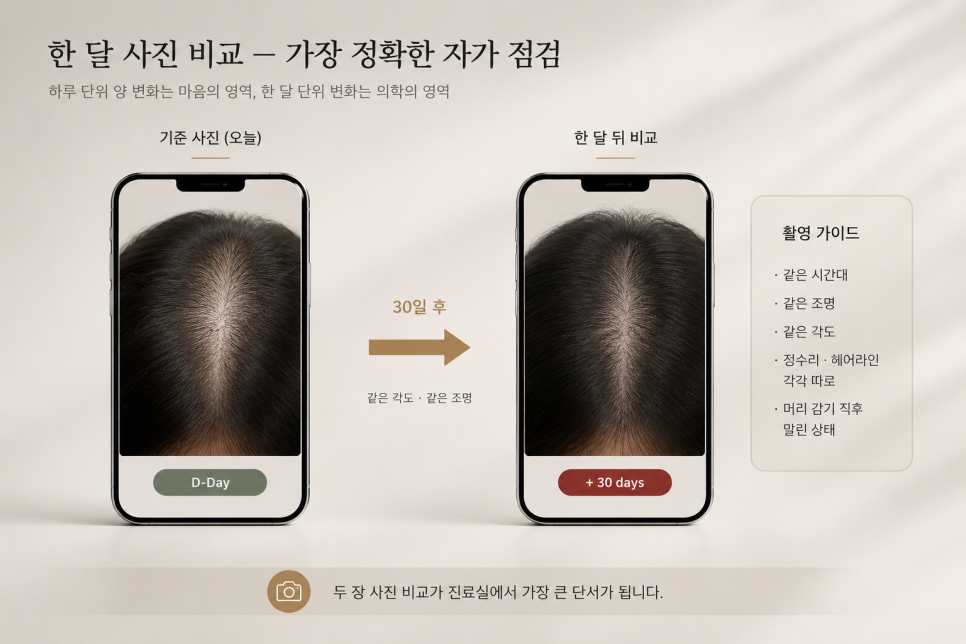
무엇보다 중요한 것은 혼자 걱정하는 것보다 병원을 빠르게 찾아가 정확한 검사를 토대로 진료를 받아보는 것이겠죠.
참고 — 본문에 인용한 수치는 휴지기 탈모(telogen effluvium)의 표준 진단 기준과, 잡아당기기 검사(hair pull test) 가이드를 따랐습니다.
- Hughes EC, Saleh D. Telogen Effluvium. StatPearls (2023 update) — 휴지기 탈모 정의·진단 기준
- Rebora A. Telogen effluvium: a comprehensive review. Clin Cosmet Investig Dermatol. 2019;12:583-590 — 200가닥 기준의 임상 적용
- McDonald KA, Shelley AJ, Colantonio S, Beecker J. Hair pull test: Evidence-based update and revision of guidelines. J Am Acad Dermatol. 2017;76(3):472-477 — 잡아당기기 검사 표준 (60가닥 중 6가닥 이상이면 양성)
髪を洗うときの抜け毛、どのくらいから病院に来るべき?
診察でお会いする患者さまの中に、こうおっしゃる方が多くいます。
「最近、髪を洗うたびに抜け毛がすごく多いんです。私、薄毛でしょうか?」
シャワーから出ると浴室の床いっぱい、枕にもひと握り、ブラシにもひと握り。「これが全部抜けたら終わりじゃないか」と思うそのお気持ち、よく分かります。当然のご心配です。
今日はそのご心配を少し整理してお伝えしたいと思います。
1日50〜100本は自然な抜け毛です
人の髪は平均で10万〜12万本ほどが頭皮に生えています。その大半は成長していますが、約10%は常に休止期(休む時期)に入り、自然に抜けていきます。いわば一部が「休暇」に出るわけです。ですから1日50〜100本ほど抜けるのは、薄毛とは関係なく誰にでも起こることです。
この本数が、どのあたりから意味が変わってくるのかを整理すると、次のとおりです。
- 1日50〜100本 — 正常の範囲
- 1日100〜150本 — 軽い変化。一時的なら大きな問題ではありませんが、2〜3週間以上続くなら一度原因を調べる価値があります
- 1日150〜200本が2週間以上 — 休止期脱毛(テロゲン・エフルビウム)を疑う領域
- 1日200本以上 — 明らかな休止期脱毛。出産直後、強いストレスの出来事の直後、急激なダイエットや大きな手術の後、2〜3か月の時点で一時的に200〜300本まで抜けることがあります。この場合も原因が落ち着けば、通常3〜6か月以内に回復します。
問題は、この数字がなかなか実感としてつかめないことです。一本ずつ数えるわけにもいかないので、いつも「たくさん抜けている気がする」という感覚だけが残ります。
量より大切なのは「形」です
実は医師の立場として、量より気にしているのは「抜けた髪の形」です。
抜けた毛が次第に細くなっていないか、短い産毛のようなものが混じって抜けていないか、分け目が普段より広く見えないか、頭頂部から頭皮の色が透け始めていないか。こうした変化が1〜2か月のあいだに積み重なると、単なる休止期の抜け毛ではなく、本格的な薄毛が始まったサインかもしれません。
逆に、量は多く抜けても、抜けた髪が依然として太くて長い正常な毛であれば、一時的な休止期脱毛の可能性が高いです。とくに出産後3〜4か月、大きなダイエット後2〜3か月、強いストレスの出来事の後1か月ほどの時点でよく起こります。この場合は原因が落ち着けば、時間をかけて自然に回復することが多いです。
自宅でできる「引っ張りテスト」
診察室でも使う簡単な自己チェック法があります。洗髪前の乾いた状態で、一か所の髪を約60本ほど指で軽くつまみ、頭皮から毛先の方向へゆっくり引いてみてください。
正常なら0〜2本ほどが指のあいだに抜けてきます。一度に6本以上(約10%以上)抜けると進行中の休止期脱毛が疑われ、診察を受けたほうがよいでしょう。このテストは頭頂部・分け目・ヘアライン・後頭部など、部位ごとに分けて行うと、どの部位がより強いかも見当がつきます。
抜けた本数を数えるより大切な、薄毛の見分け方
毎日の抜け毛の量そのものより、1か月前のご自身の写真と鏡を見比べるほうが、はるかに正確です。
「1日の抜け毛の量は気持ちの問題、1か月単位の変化は医学の領域」と患者さまによくお伝えします。頭頂部とヘアラインを同じ角度・同じ照明で1か月おきに撮っておくと、診察室で最も正確な手がかりになります。
日差しなど外光の影響を受けにくいトイレのような場所で、日が暮れた後に同じカメラ・同じ角度で撮って見比べるとよいでしょう。
何より大切なのは、一人で悩むより、早めに病院を訪れ、正確な検査をもとに診察を受けることでしょう。
参考 — 本文で引用した数値は、休止期脱毛(テロゲン・エフルビウム)の標準的な診断基準と、引っ張りテスト(hair pull test)のガイドに従いました。
- Hughes EC, Saleh D. Telogen Effluvium. StatPearls (2023 update) — 休止期脱毛の定義・診断基準
- Rebora A. Telogen effluvium: a comprehensive review. Clin Cosmet Investig Dermatol. 2019;12:583-590 — 200本基準の臨床応用
- McDonald KA, Shelley AJ, Colantonio S, Beecker J. Hair pull test: Evidence-based update and revision of guidelines. J Am Acad Dermatol. 2017;76(3):472-477 — 引っ張りテストの標準(60本中6本以上で陽性)
How much hair falling out when washing means you should see a doctor?
Many patients I meet during consultations say something like this.
Lately, every time I wash my hair, so much falls out — do I have hair loss?
A whole clump on the bathroom floor after a shower, a handful on the pillow, a handful on the comb. That feeling of “isn’t it over once all of this falls out?” — I understand it. It is a natural worry.
Today I would like to help sort out that worry.
50–100 strands a day is natural shedding
A person has, on average, about 100,000 to 120,000 hairs growing on the scalp. Most of these are actively growing, but about 10% are always in the telogen (resting) phase and fall out naturally. Some are, so to speak, going on vacation. So losing about 50 to 100 strands a day happens to everyone, regardless of hair loss.
Here is how the meaning of this number changes at each level.
- 50–100 strands a day — normal range
- 100–150 strands a day — a mild change. If temporary it is not a big problem, but if it lasts more than 2–3 weeks it is worth examining the cause
- 150–200 strands a day for more than 2 weeks — the range where telogen effluvium is suspected
- More than 200 strands a day — clear telogen effluvium. Right after childbirth, right after a strong stress event, or 2–3 months after rapid dieting or major surgery, there are cases of temporarily losing up to 200–300 strands. Even then, once the cause is resolved, it usually recovers within 3–6 months.
The problem is that these numbers do not stick in your mind. You cannot count strand by strand, so all that remains is the feeling that “a lot seems to be falling out.”
More important than amount is the “shape”
In fact, from a doctor’s standpoint, what I pay more attention to than the amount is the shape of the fallen hair.
Is the fallen hair gradually getting thinner? Are short, downy-looking hairs mixed in? Does the part look wider than usual? Has the scalp color started to show through at the crown? If these changes accumulate over a month or two, it may be a sign that not simple telogen shedding but full-fledged hair loss has begun.
Conversely, if a lot falls out but the fallen hair is still thick, long, normal hair, it is likely temporary telogen effluvium. It often happens especially 3–4 months after childbirth, 2–3 months after major dieting, or about a month after a strong stress event. In this case, once the cause is resolved, it often recovers naturally over time.
The pull test you can do at home
There is a simple self-check that we also use in the clinic. Before washing, on dry hair, lightly grasp about 60 strands of one area with your fingers and slowly pull from the scalp toward the ends.
If normal, about 0–2 strands come out between your fingers. If 6 or more (about 10% or more) come out at once, ongoing telogen effluvium can be suspected, and it is best to get examined. Doing this test separately by area — crown, part, hairline, back of the head — also lets you gauge which area is more severe.
A hair-loss diagnosis method more important than counting fallen strands
Rather than the daily amount that falls out, comparing your own photo from a month ago with the mirror is far more accurate.
I often tell patients that the daily amount of shedding is a matter of the mind, while month-to-month change is the realm of medicine. If you photograph the crown and hairline at the same angle and lighting one month apart, it becomes the most accurate clue in the clinic.
It is good to take the photos in a place like a bathroom, less affected by outside light such as sunlight, after sunset with the same camera and the same angle, and compare them.
Above all, more important than worrying alone is quickly visiting a hospital and getting examined based on accurate testing.
Note — The figures cited in this text follow the standard diagnostic criteria for telogen effluvium and the hair pull test guidelines.
- Hughes EC, Saleh D. Telogen Effluvium. StatPearls (2023 update) — definition and diagnostic criteria of telogen effluvium
- Rebora A. Telogen effluvium: a comprehensive review. Clin Cosmet Investig Dermatol. 2019;12:583-590 — clinical application of the 200-strand criterion
- McDonald KA, Shelley AJ, Colantonio S, Beecker J. Hair pull test: Evidence-based update and revision of guidelines. J Am Acad Dermatol. 2017;76(3):472-477 — the pull test standard (positive if 6 or more of 60 strands)