정수리 가마는 왜 소용돌이 모양일까? 발생학적 이유와 모발이식에서의 중요성頭頂部のつむじはなぜ渦巻き状なのか?発生学的な理由と植毛での重要性Why Is the Crown Whorl Spiral-Shaped? The Embryological Reason and Its Importance in Hair Transplants
[정수리 가마의 비밀]
왜 소용돌이 모양일까?
안녕하세요. 청담동에서 모발 건강과 자연스러운 아름다움을 위해 끊임없이 연구하는 의사 이인재 입니다.
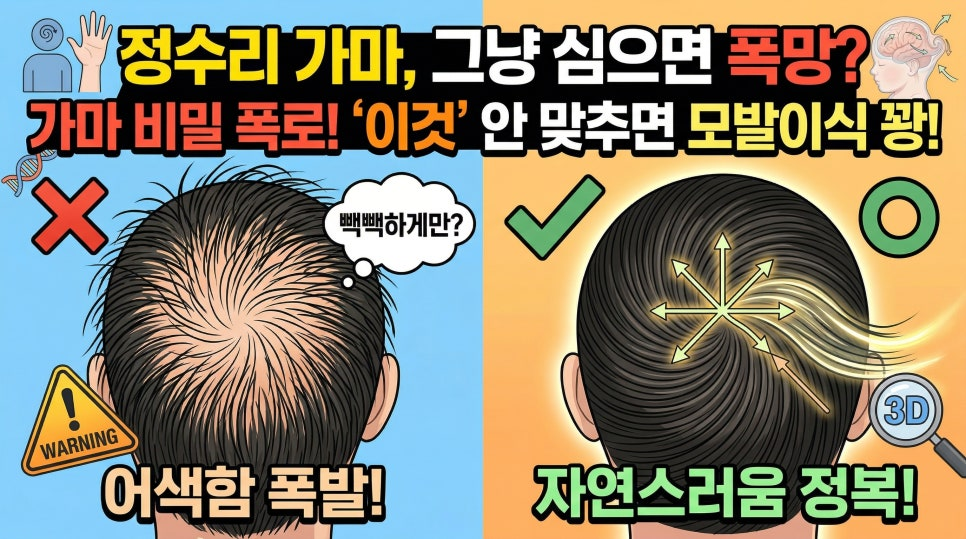
탈모 상담을 하다 보면 많은 분이 정수리 부위에 유독 민감해하십니다. 거울로 직접 보기 힘든 곳이라 불안감이 더 크기도 하지만, 정수리 특유의 ‘소용돌이(Whorl, 가마)’ 패턴 때문에 조금만 머리숱이 비어 보여도 탈모가 심하게 진행된 것처럼 느끼기 때문입니다.
대부분의 사람은 가마를 단순히 “머리카락이 나는 시작점” 정도로 생각합니다. 심지어 어릴 적엔 “엄마 뱃속에서 하도 많이 움직여서 생긴 자국”이라는 귀여운 속설을 믿기도 했죠.
하지만 의학적으로 접근해 보면, 이 작은 소용돌이에는 태아 때부터 결정된 놀라운 발생학적 비밀과 함께, 향후 탈모 치료나 모발이식 성패를 가르는 핵심 열쇠가 숨겨져 있습니다.
오늘은 정수리 소용돌이가 생기는 진짜 이유와 이것이 탈모 치료(수술, 문신 포함)에서 왜 그토록 중요한지 심도 있게 파헤쳐 보겠습니다.
1. 가마는 ‘움직인 자국’이 아니다? 정수리 가마 소용돌이의 발생학
결론부터 말씀드리면 가마는 우연히 생기는 것이 아닙니다. 아기의 뇌가 커지는 과정에서 두피가 늘어나는 기계적 힘 (Tension) 에 의해 형성됩니다.
태아의 성장을 상상해 보세요. 두개골 안에서 뇌는 급격하게 팽창합니다. 이를 덮고 있는 두피 조직 역시 고정된 평면이 아니라 뇌의 성장에 맞춰 함께 늘어나야 하는 살아있는 조직입니다.
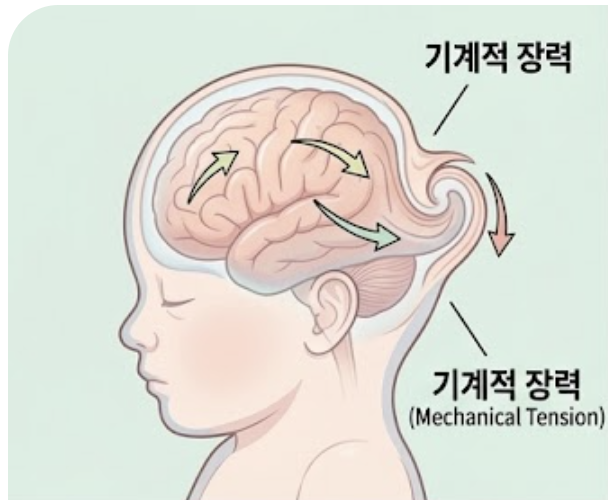
이때 두피 조직은 두개골의 곡면을 따라 특정 방향으로 늘어나는 힘, 확장을 받게 됩니다. 이 거대한 성장 에너지가 소용돌이치는 기계적 힘으로 작용하여, 모낭의 배열 패턴을 소용돌이 모양으로 고착시키는 것입니다.
결국 가마는 “내 뇌가 태아기에 건강하게 잘 자랐다”는 역설적인 증거이기도 합니다.
흥미로운 여담: 임신 중 속쓰림과 아기 머리숱
“임신 중 속쓰림이 심하면 머리숱이 많은 아기가 태어난다” 는 속설, 들어보셨나요?
놀랍게도 여기엔 과학적 근거가 있습니다.
임신 중 분비되는 프로게스테론과 릴랙신 호르몬은 하부 식도 괄약근을 이완시켜 속쓰림을 유발합니다. 그런데 이 호르몬들은 동시에 임산부의 영양 흡수를 개선하고, 태아의 모발 성장을 조절하는 데도 관여합니다. 즉, 호르몬 작용이 활발해 속쓰림이 심한 만큼 아기의 모발 성장 신호도 강했을 가능성이 있는 것이죠.

2. 가마 방향조차 유전이다? 손잡이와의 상관관계
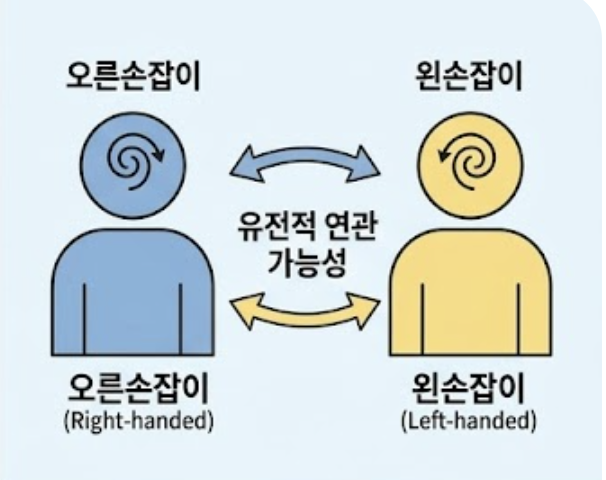
가마의 존재 유무뿐만 아니라 소용돌이의 회전 방향(시계 방향 vs 반시계 방향) 역시 단순한 우연이 아닙니다.
흥미로운 연구들에 따르면, 우리가 오른손잡이인지 왼손잡이인지와 정수리 가마의 회전 방향 사이에는 유전적 관련성이 존재한다는 연구도 있습니다. 이는 머리카락 한 올의 방향조차도 인간의 비대칭적 신체 발달과 궤를 같이하는 독특한 발생학적, 유전학적 결과물이라는 의미입니다.
3. 모발이식 수술과 두피문신 시술에서 정수리가 가마가 중요한 이유
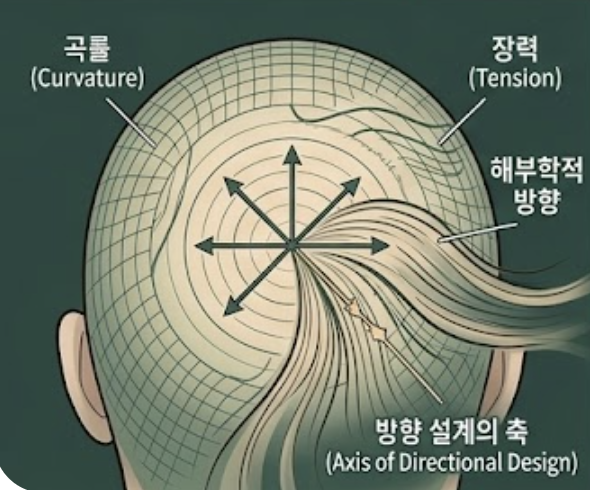
많은 분이 탈모가 생기면 정수리를 단순히 ‘머리카락이 빠진 빈 평면’으로 생각합니다. 하지만 오늘 발생학적 측면에서 알아보았듯 두피는 엄연히 장력, 곡률, 해부학적 방향성이 존재하는 복잡한 3차원 구조물입니다.
가마는 이 3차원 구조의 중심축입니다. 가마를 중심으로 모발은 0도에서 360도까지 제각각 다른 각도와 흐름을 가지고 뻗어 나갑니다. 따라서 정수리탈모 치료에 해당하는 수술과 시술은 이 ‘복잡한 흐름’을 자연스럽게 복원하는 과정이어야 합니다.
4. 왜 정수리 탈모 치료는 ‘방향 설계’가 핵심일까?
이제 가장 중요한 이야기입니다. 정수리 가마의 해부학적 특성은 모발이식 수술과 두피문신(SMP)의 난이도를 결정짓는 가장 큰 요인입니다.
① 모발이식 수술: 밀도보다 중요한 것은 ‘방향’
정수리 모발이식을 원하는 환자분들은 흔히 “그냥 빽빽하게 심어주세요”라고 요청하십니다. 하지만 전문가 입장에서 정수리는 밀도보다 방향 설계가 훨씬 더 중요한 부위입니다.
가마 부위는 모발이 방사형으로 퍼지기 때문에 조금만 밀도가 떨어져도 두피가 쉽게 드러나 보입니다. 이 see-though appearance, 머리카락 사이로 밝게 비춰보이는 두피가 우리 고민의 원인이 됩니다.
어쩔 수 없는 해부학적 한계를 극복하려면 예술에 가까운 세밀한 이식 각도 조절이 필요합니다.
- 소용돌이의 중심축(Spiraling Point)을 어디에 잡을 것인가?
- 회전 방향에 맞춰 이식모의 각도를 어떻게 심을 것인가?
- 주변 모발의 자연스러운 흐름과 어떻게 연결할 것인가?
이 방향성을 고려하지 않고 무작위로 빽빽하게만 심으면, 설령 이식한 머리가 다 자라더라도 머리카락이 떡진 것처
럼 뭉치거나 빗질이 안 되는 등 극도로 어색한 결과가 나옵니다. 밀도는 낮아도 방향이 완벽하면 시각적으로 훨씬 풍성해 보입니다.

② 두피문신(SMP): 3차원 입체감을 구현하는 뱡향성
두피문신 역시 마찬가지입니다. 단순히 비어있는 두피를 검게 칠하는 것이 아닙니다. SMP는 점을 찍어 모근의 그루터기를 표현하는 시술입니다.
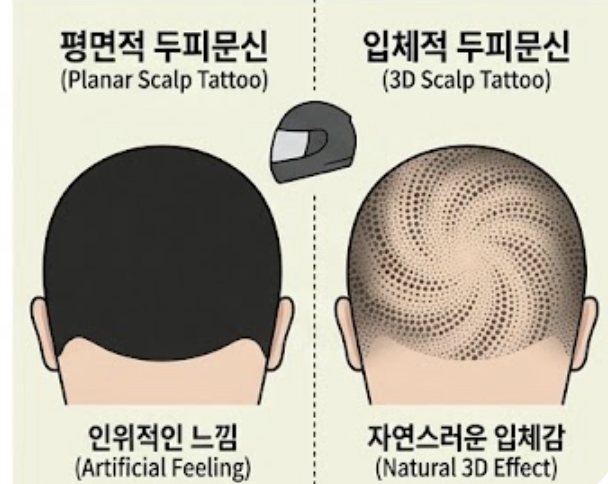
이때 실제 모발의 방사형 흐름(소용돌이 패턴)을 훼손하지 않는 선에서 점의 밀도와 크기, 배치를 세밀하게 조절하지 않으면, 마치 두피에 헬멧을 쓴 것처럼 평면적이고 인위적인 결과가 나옵니다. 가마의 해부학적 방향성을 이해해야만 3차원적인 입체감과 자연스러운 음영을 표현할 수 있습니다.
■ 핵심 요약: 이것만은 기억하세요!
오늘 글의 핵심 내용을 정리해 드립니다.
- 발생학적 기원: 정수리 소용돌이는 태아기 뇌 성장에 따른 두피의 기계적 확장 과정에서 형성된 자연스러운 구조입니다.
- 유전적 연관성: 가마의 회전 방향은 손잡이(오른손/왼손)와 유전적 연관성을 가질 정도로 깊은 생물학적 근거가 있습니다.
- 치료의 핵심: 정수리는 단순한 평면이 아닌 3차원 곡면입니다. 탈모 치료(모발이식, SMP) 시 밀도보다 가마의 방향성(Spiraling flow)을 어떻게 설계하느냐가 자연스러운 결과의 성패를 가릅니다.
References
- Redmond LC, Limbu S, Farjo B, Messenger AG, Higgins CA.
- Male pattern hair loss: Can developmental origins explain the pattern?
- Experimental Dermatology. 2023;32(7):1174–1181.
- doi:10.1111/exd.14839
- Costigan KA, Sipsma HL, DiPietro JA.
- Pregnancy folklore revisited: the case of heartburn and hair.
- Birth. 2006;33(4):311–314.
- doi:10.1111/j.1523-536X.2006.00128.x
- Klar A.
- Human handedness and scalp hair-whorl direction develop from a common genetic mechanism.
- Genetics. 2003;165(1):269–276.
- doi:10.1093/genetics/165.1.269
[頭頂部のつむじの秘密]なぜ渦巻き状なのか?
こんにちは。清潭洞で毛髪の健康と自然な美しさのために絶えず研究する医師、イ・インジェです。
薄毛の相談をしていると、多くの方が頭頂部の部位に特に敏感になられます。鏡で直接見づらい場所なので不安が大きいこともありますが、頭頂部特有の「渦巻き(Whorl、つむじ)」パターンのために、少し毛量が空いて見えるだけでも薄毛がひどく進行したように感じるからです。
ほとんどの人はつむじを単に「髪の毛が生える起点」程度に考えます。幼い頃には「お母さんのお腹の中でたくさん動いたからできた跡」というかわいい俗説を信じたりもしましたね。
しかし医学的にアプローチしてみると、この小さな渦巻きには胎児のときから決まっている驚くべき発生学的な秘密とともに、今後の薄毛治療や植毛の成否を分ける核心の鍵が隠されています。
今日は頭頂部の渦巻きができる本当の理由と、これが薄毛治療(手術・文身を含む)でなぜそれほど重要なのかを深く掘り下げてみます。
1. つむじは「動いた跡」ではない?頭頂部つむじの渦巻きの発生学
結論から申し上げると、つむじは偶然できるものではありません。赤ちゃんの脳が大きくなる過程で頭皮が伸びる機械的な力(Tension)によって形成されます。
胎児の成長を想像してみてください。頭蓋骨の中で脳は急激に膨張します。これを覆う頭皮組織もまた固定された平面ではなく、脳の成長に合わせて一緒に伸びなければならない生きた組織です。
このとき頭皮組織は頭蓋骨の曲面に沿って特定の方向に伸びる力、拡張を受けます。この巨大な成長エネルギーが渦を巻く機械的な力として作用し、毛包の配列パターンを渦巻き状に固定させるのです。
結局つむじは「私の脳が胎児期に健康によく育った」という逆説的な証拠でもあります。
興味深い余談:妊娠中の胸やけと赤ちゃんの毛量
「妊娠中の胸やけがひどいと毛量の多い赤ちゃんが生まれる」という俗説、聞いたことがありますか?
驚くことに、ここには科学的な根拠があります。
妊娠中に分泌されるプロゲステロンとリラキシンというホルモンは、下部食道括約筋を弛緩させて胸やけを引き起こします。ところがこれらのホルモンは同時に、妊婦の栄養吸収を改善し、胎児の毛髪成長を調節することにも関与します。つまり、ホルモン作用が活発で胸やけがひどいほど、赤ちゃんの毛髪成長シグナルも強かった可能性があるのです。
2. つむじの方向すら遺伝?利き手との相関関係
つむじの有無だけでなく、渦巻きの回転方向(時計回り vs 反時計回り)もまた単純な偶然ではありません。
興味深い研究によると、私たちが右利きか左利きかと頭頂部つむじの回転方向の間には遺伝的な関連性が存在するという研究もあります。これは髪の毛一本の方向すら、人間の非対称的な身体発達と軌を一にする独特な発生学的・遺伝学的な結果物だという意味です。
3. 植毛手術と頭皮文身の施術で頭頂部のつむじが重要な理由
多くの方が薄毛になると頭頂部を単に「髪の毛が抜けた空の平面」と考えます。しかし今日発生学的な側面から見てきたように、頭皮は厳然と張力、曲率、解剖学的な方向性が存在する複雑な三次元の構造物です。
つむじはこの三次元構造の中心軸です。つむじを中心に毛髪は0度から360度までそれぞれ異なる角度と流れをもって伸びていきます。したがって頭頂部の薄毛治療にあたる手術と施術は、この「複雑な流れ」を自然に復元する過程でなければなりません。
4. なぜ頭頂部の薄毛治療は「方向設計」が核心なのか?
さて最も重要な話です。頭頂部つむじの解剖学的な特性は、植毛手術と頭皮文身(SMP)の難易度を決定づける最大の要因です。
① 植毛手術:密度より重要なのは「方向」
頭頂部の植毛を希望する患者様はよく「とにかく密に植えてください」と要望されます。しかし専門家の立場では、頭頂部は密度より方向設計のほうがはるかに重要な部位です。
つむじの部位は毛髪が放射状に広がるため、少し密度が落ちるだけでも頭皮が容易に見えてしまいます。このsee-through appearance、髪の毛の間から明るく透けて見える頭皮が、私たちの悩みの原因になります。
避けられない解剖学的な限界を克服するには、芸術に近い緻密な移植角度の調節が必要です。
- 渦巻きの中心軸(Spiraling Point)をどこに取るか?
- 回転方向に合わせて移植毛の角度をどう植えるか?
- 周囲の毛髪の自然な流れとどうつなげるか?
この方向性を考慮せず無作為に密に植えるだけでは、たとえ移植した髪がすべて育っても、髪の毛がべたついたように
固まったり櫛が通らないなど、極度に不自然な結果になります。密度は低くても方向が完璧なら、視覚的にはるかに豊かに見えます。
② 頭皮文身(SMP):三次元の立体感を実現する方向性
頭皮文身も同じです。単に空いた頭皮を黒く塗るのではありません。SMPは点を打って毛根の切り株を表現する施術です。
このとき実際の毛髪の放射状の流れ(渦巻きパターン)を損なわない範囲で、点の密度や大きさ、配置を緻密に調節しなければ、まるで頭皮にヘルメットをかぶったように平面的で人為的な結果になります。つむじの解剖学的な方向性を理解してこそ、三次元的な立体感と自然な陰影を表現できます。
■ 核心まとめ:これだけは覚えてください!
今日の記事の核心をまとめます。
- 発生学的な起源:頭頂部の渦巻きは胎児期の脳の成長に伴う頭皮の機械的な拡張過程で形成された自然な構造です。
- 遺伝的な関連性:つむじの回転方向は利き手(右手/左手)と遺伝的な関連性を持つほど深い生物学的な根拠があります。
- 治療の核心:頭頂部は単なる平面ではなく三次元の曲面です。薄毛治療(植毛、SMP)の際、密度よりつむじの方向性(Spiraling flow)をどう設計するかが、自然な結果の成否を分けます。
References
- Redmond LC, Limbu S, Farjo B, Messenger AG, Higgins CA.
- Male pattern hair loss: Can developmental origins explain the pattern?
- Experimental Dermatology. 2023;32(7):1174–1181.
- doi:10.1111/exd.14839
- Costigan KA, Sipsma HL, DiPietro JA.
- Pregnancy folklore revisited: the case of heartburn and hair.
- Birth. 2006;33(4):311–314.
- doi:10.1111/j.1523-536X.2006.00128.x
- Klar A.
- Human handedness and scalp hair-whorl direction develop from a common genetic mechanism.
- Genetics. 2003;165(1):269–276.
- doi:10.1093/genetics/165.1.269
[The Secret of the Crown Whorl] Why Is It Spiral-Shaped?
Hello. I am Dr. Injae Lee, a physician who researches endlessly for hair health and natural beauty in Cheongdam.
When doing hair-loss consultations, many people are especially sensitive about the crown area. It is a place hard to see directly in the mirror, so anxiety is greater, but also because, due to the crown’s characteristic “whorl” pattern, even a little empty-looking hair makes them feel their hair loss has advanced severely.
Most people think of the whorl simply as “the starting point where hair grows.” As children we even believed the cute folklore that it was “a mark made from moving around so much in mom’s belly.”
But approached medically, this small whorl hides, along with an astonishing embryological secret determined from the fetal stage, a key that decides the success or failure of future hair-loss treatment or a hair transplant.
Today I will dig deeply into the real reason the crown whorl forms and why it matters so much in hair-loss treatment (including surgery and micropigmentation).
1. The whorl is not a “mark of movement”? The embryology of the crown whorl
To give the conclusion first, the whorl does not form by chance. It is formed by the mechanical force (tension) of the scalp stretching as the baby’s brain grows.
Imagine a fetus’s growth. Inside the skull, the brain expands rapidly. The scalp tissue covering it is also not a fixed plane but living tissue that must stretch along with the brain’s growth.
At this time the scalp tissue receives a force, an expansion, stretching in a specific direction along the curved surface of the skull. This enormous growth energy acts as a swirling mechanical force, fixing the arrangement pattern of the follicles into a spiral shape.
In the end, the whorl is also paradoxical evidence that “my brain grew healthily and well during the fetal period.”
An interesting aside: heartburn during pregnancy and a baby’s hair volume
Have you heard the folklore that “if heartburn during pregnancy is severe, a baby with a lot of hair is born”?
Surprisingly, there is scientific basis here.
The hormones progesterone and relaxin, secreted during pregnancy, relax the lower esophageal sphincter and cause heartburn. Yet these hormones are also simultaneously involved in improving the mother’s nutrient absorption and regulating the fetus’s hair growth. In other words, the more active the hormone action and the more severe the heartburn, the stronger the baby’s hair-growth signal may have been.
2. Even the whorl’s direction is inherited? The correlation with handedness
Not only the presence of a whorl but also the rotation direction of the spiral (clockwise vs counterclockwise) is not simple chance.
According to interesting studies, there is research showing a genetic association between whether we are right-handed or left-handed and the rotation direction of the crown whorl. This means that even the direction of a single strand of hair is a unique embryological and genetic product aligned with the asymmetric bodily development of humans.
3. Why the crown whorl matters in hair-transplant surgery and scalp-micropigmentation procedures
Many people, when hair loss occurs, think of the crown simply as an “empty plane where hair has fallen out.” But as we saw today from the embryological side, the scalp is clearly a complex three-dimensional structure with tension, curvature, and anatomical directionality.
The whorl is the central axis of this three-dimensional structure. Centered on the whorl, the hair extends out with all different angles and flows, from 0 to 360 degrees. Therefore surgery and procedures for crown hair loss must be a process of naturally restoring this “complex flow.”
4. Why is “direction design” the core of crown hair-loss treatment?
Now the most important point. The anatomical characteristics of the crown whorl are the biggest factor determining the difficulty of hair-transplant surgery and scalp micropigmentation (SMP).
① Hair-transplant surgery: what matters more than density is “direction”
Patients who want a crown hair transplant often request, “Just plant it densely.” But from an expert’s standpoint, the crown is an area where direction design is far more important than density.
Because in the whorl area the hair spreads radially, even a slight drop in density easily exposes the scalp. This see-through appearance — the scalp showing brightly through the hair — becomes the cause of our concern.
To overcome the unavoidable anatomical limit requires meticulous transplant-angle control close to art.
- Where to set the spiraling point?
- How to plant the angle of the transplanted hair according to the rotation direction?
- How to connect it with the natural flow of the surrounding hair?
If you plant only densely at random without considering this directionality, then even if all the transplanted hair grows, the hair clumps as if caked
or cannot be combed — an extremely unnatural result. Even with low density, if the direction is perfect it looks far fuller visually.
② Scalp micropigmentation (SMP): directionality that realizes three-dimensional depth
Scalp micropigmentation is the same. It is not simply painting the empty scalp black. SMP is a procedure that places dots to express the stubs of hair roots.
At this time, unless the density, size, and placement of the dots are meticulously controlled without damaging the actual radial flow of the hair (the whorl pattern), the result is flat and artificial, as if wearing a helmet on the scalp. Only by understanding the anatomical directionality of the whorl can three-dimensional depth and natural shading be expressed.
■ Core summary: remember at least this!
Let me summarize the core of today’s article.
- Embryological origin: the crown whorl is a natural structure formed during the mechanical expansion of the scalp caused by fetal brain growth.
- Genetic association: the rotation direction of the whorl has a biological basis deep enough to hold a genetic association with handedness (right/left hand).
- The core of treatment: the crown is not a simple plane but a three-dimensional curved surface. In hair-loss treatment (hair transplant, SMP), how you design the spiraling flow of the whorl rather than density decides the success or failure of a natural result.
References
- Redmond LC, Limbu S, Farjo B, Messenger AG, Higgins CA.
- Male pattern hair loss: Can developmental origins explain the pattern?
- Experimental Dermatology. 2023;32(7):1174–1181.
- doi:10.1111/exd.14839
- Costigan KA, Sipsma HL, DiPietro JA.
- Pregnancy folklore revisited: the case of heartburn and hair.
- Birth. 2006;33(4):311–314.
- doi:10.1111/j.1523-536X.2006.00128.x
- Klar A.
- Human handedness and scalp hair-whorl direction develop from a common genetic mechanism.
- Genetics. 2003;165(1):269–276.
- doi:10.1093/genetics/165.1.269